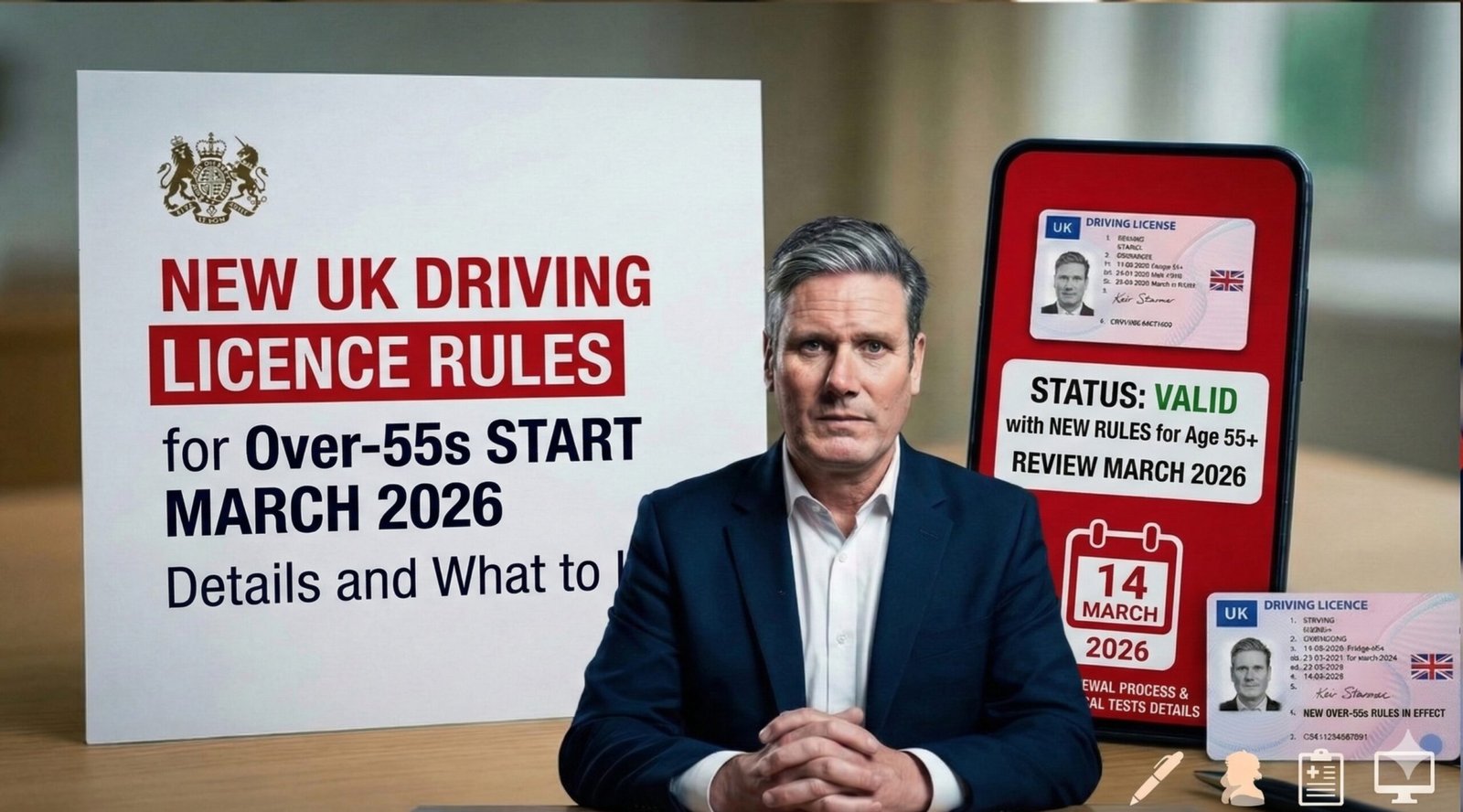
The Driver and Vehicle Licensing Agency (DVLA) has introduced a significant set of updates to driving licence regulations, specifically targeting motorists aged 55 and over. Confirmed this March, these changes are designed to address the increasing number of older drivers on UK roads while balancing road safety with personal independence. For the millions of experienced drivers across England, Scotland, and Wales, these new rules represent a shift in how medical fitness is assessed and how licences are renewed as they transition into later life.
While the core principle of being able to drive as long as you are fit to do so remains, the administrative and medical hurdles are becoming more structured. This 2026 update aims to streamline the process for those in good health while introducing stricter oversight for specific age-related conditions.
The new age 55 threshold
Historically, the most significant age-related milestone for UK drivers was 70, the point at which a licence must be renewed every three years. However, from March 2026, the DVLA is introducing a “voluntary health declaration” for those reaching the age of 55. This is not a mandatory medical exam, but rather a digital checkpoint integrated into the standard 10-year photocard renewal.
When you reach 55 and apply for your new photocard, you will now encounter an expanded “Fitness to Drive” section. This requires drivers to explicitly confirm they have reviewed the updated list of reportable medical conditions. The goal is to encourage self-awareness earlier in the aging process, rather than waiting until the more rigorous checks at 70.
Mandatory eyesight checks at renewal
A major change confirmed this week involves stricter eyesight requirements during the renewal process for over-55s. While the “20-metre number plate test” remains the standard, the 2026 rules encourage drivers to provide a recent optician’s prescription (issued within the last two years) when renewing their photocard.
The DVLA has noted that vision can deteriorate subtly between the ages of 50 and 60. By making this a part of the over-55 renewal guidance, the government hopes to reduce the number of vision-related accidents. If a driver cannot confirm they have had a professional eye test recently, they may be prompted to complete a self-assessment vision check through the DVLA’s new “View My Driver Record” online portal.
Updates to medical reporting rules
The list of “notifiable conditions” has been updated for March 2026. Drivers aged 55 and over are now under a stricter obligation to report the onset of conditions such as glaucoma, early-stage Parkinson’s, and certain types of diabetes immediately, rather than waiting for their next renewal.
The new guidance clarifies that simply having a condition does not mean your licence will be revoked. In over 90% of cases where a medical condition is reported, the DVLA allows the driver to keep their licence, often subject to a periodic review. The focus is on management and safety, ensuring that drivers are using the correct treatments or vehicle adaptations to stay safe behind the wheel.
The 70 plus renewal transition
For those approaching 70, the 2026 rules have simplified the “Section 88” provisions. This is the law that allows you to continue driving while the DVLA processes your medical renewal application, provided your doctor supports you.
Starting this month, the DVLA has launched a “Fast-Track” renewal service for drivers over 70 who have no reportable medical conditions. This digital-first service aims to issue new three-year licences within five working days, significantly reducing the anxiety for older drivers who fear being left without their cars during a lengthy administrative wait.
Changes to heavy vehicle categories
For many over-55s, the right to drive larger vehicles (category C1) and minibuses (category D1) is a grandfathered right on their licence. The new March 2026 rules emphasize that if you wish to keep these “higher” categories after age 70, you must undergo a more rigorous medical assessment, including a D4 medical form completed by a doctor.
The 2026 update specifically warns drivers aged 55 to 65 to start thinking about these categories now. If you do not use your C1 or D1 entitlements, you can choose to “voluntarily surrender” them during your 10-year renewal to avoid the need for medical paperwork later. However, once surrendered, these categories are difficult to get back, so the DVLA urges drivers to consider their future lifestyle needs carefully.
Digital-First and paper-free licences
In line with broader government policy, the DVLA is pushing for a paperless system. From March 8, 2026, over-55s are being heavily incentivized to use the “Driver and Vehicles” account online. This portal allows you to track your renewal dates, update your address, and report medical changes instantly.
While a physical photocard is still issued, the “record of truth” is now the digital file. This is particularly useful for over-55s who may be hiring cars abroad or need to prove their identity for other services. The digital transition also makes it easier for the DVLA to send targeted health reminders to drivers based on their age bracket.
The role of the “Mature Driver” assessment
The government has confirmed new funding for voluntary “Mature Driver” assessments. While not a “re-test,” these are coaching sessions designed to help drivers aged 55 and over refresh their skills, learn about new road layouts (like “smart” motorways), and get advice on using modern vehicle technology like lane-assist and adaptive cruise control.
From March 2026, completing one of these recognized assessments may lead to discounts on car insurance for older drivers. Several leading UK insurers have already signed up to this initiative, recognizing that drivers who take proactive steps to check their skills are statistically safer on the road.
Dealing with “Fitness to Drive” concerns
A sensitive part of the new guidance involves how the DVLA handles reports from third parties, such as family members or doctors. The 2026 rules have introduced a more “empathetic” review process. Instead of an immediate suspension, the DVLA will now more frequently use “temporary medical restrictions” while further evidence is gathered.
This allows a driver to continue using their vehicle for essential trips—such as grocery shopping or medical appointments—within a specified radius of their home while their full fitness is being assessed. This “Restricted Distance” licence is a new tool in the DVLA’s arsenal to keep people mobile while ensuring public safety.
Impact on insurance premiums
The March 2026 rules also intersect with the insurance industry. With the new DVLA data-sharing protocols, insurers can now see if a driver has completed their voluntary health declaration. While the DWP and DVLA maintain that this is about safety, consumer groups are watching closely to ensure that over-55s are not unfairly penalized with higher premiums simply for being honest about their health.
Drivers are advised to shop around, as many specialist insurers for the over-50s are now offering “safe driver” rewards for those who utilize the DVLA’s new digital health and assessment tools.
What happens if you fail to report
The penalties for failing to report a medical condition have been clarified in the 2026 update. You can be fined up to £1,000 and may be prosecuted if you are involved in an accident and it is found you had an undeclared condition.
The DVLA’s new “Safe Disclosure” policy encourages drivers to come forward. If a condition is reported voluntarily, the DVLA is more likely to work with the driver on a “licence with conditions” rather than an outright revocation. This is a significant shift in tone from the more punitive approach of previous decades.
Blue Badge and Mobility links
For drivers over 55 who may be developing mobility issues, the 2026 rules provide better integration between the DVLA and local councils. If a driver’s medical assessment suggests they may struggle with walking but are still safe to drive, the DVLA can now trigger an automatic “eligibility check” for a Blue Badge.
This “joined-up” thinking is part of a broader DWP and Department for Transport strategy to ensure that disabled and older people have a seamless support network. It recognizes that for many over-55s, the car is the only thing standing between them and social isolation.
Summary of key 2026 deadlines
If you are aged 55 or over, here are the dates and milestones you need to be aware of:
-
March 8, 2026: New health declaration becomes a part of the 10-year photocard renewal process.
-
April 2026: Launch of the new “Restricted Distance” licences for medical reviews.
-
Ongoing: Mandatory reporting of updated “notifiable conditions” list.
The message from the DVLA is clear: being over 55 does not make you a “risk,” but it does make you an “experienced” driver who needs to be mindful of their health. By following the new guidance, UK motorists can look forward to many more years of safe, independent driving.
Final thoughts for UK motorists
The 2026 driving licence updates reflect a modernizing UK. By embracing digital tools and proactive health management, the DVLA is attempting to keep the roads safe without the need for a mandatory re-test at a specific age—a move that remains politically unpopular and practically difficult.
For the over-55 community, the car is often a symbol of freedom. These new rules are not about taking that freedom away; they are about ensuring that you, your passengers, and other road users stay protected in an ever-changing transport environment. Stay informed, keep your medical records up to date, and continue to enjoy the road.